

What Are Industrial Rectifier Systems? Applications, Benefits & Types
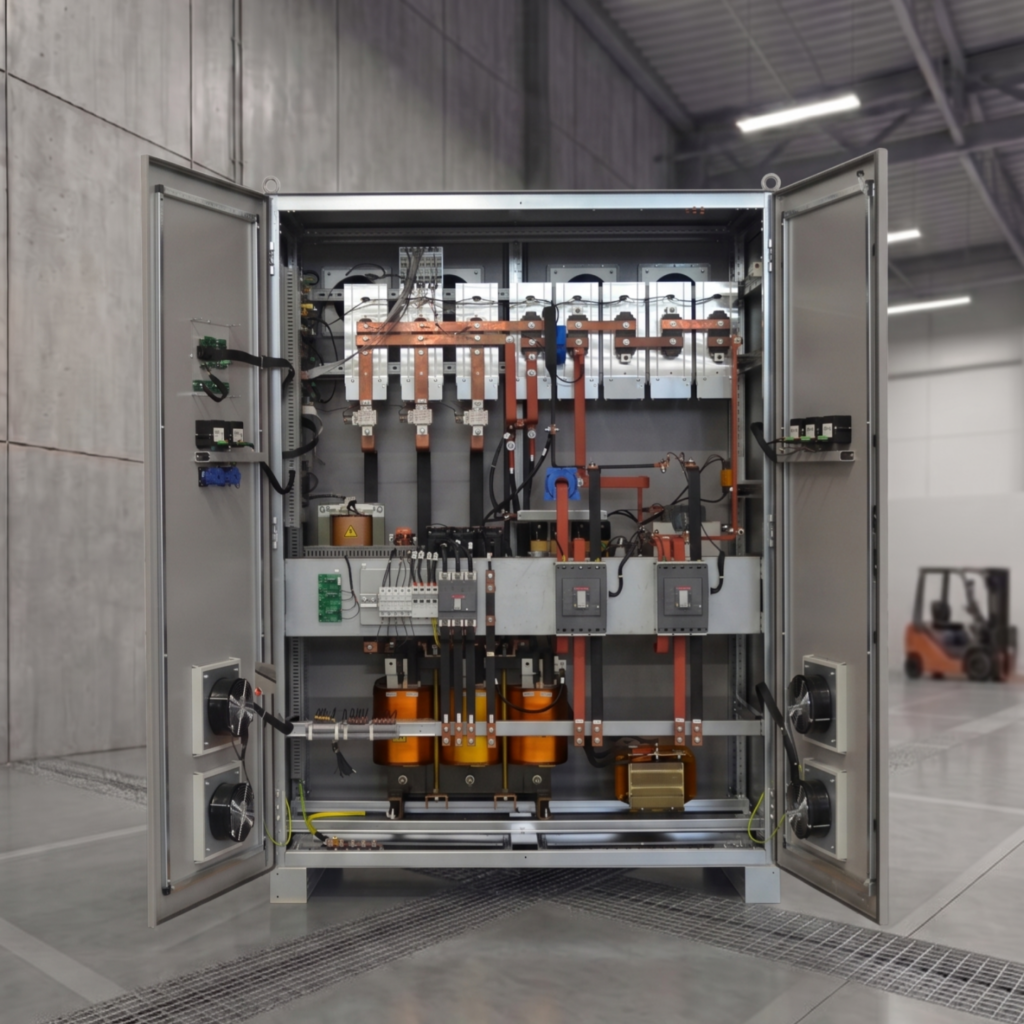
Ask an operations manager to list the critical equipment in their facility and you will hear about turbines, compressors, servers, and switchgear. Almost nobody mentions the rectifier. Yet in a substation, a telecom exchange, an electrolysis line, or an offshore platform, the industrial rectifier is the machine that everything else quietly depends on. It charges the batteries that trip the breakers. It floats the DC bus that holds the protection relays awake. It feeds the plating tanks, the excitation systems, the DC motors, and the control rooms. When a rectifier fails and the battery behind it runs down, the failure is rarely dramatic — the plant simply loses its nervous system.
That asymmetry — enormous consequence, minimal attention — is exactly why rectifier selection deserves more engineering care than it usually gets. EPC Enerji has spent years designing and manufacturing industrial rectifier and battery charger systems in Istanbul for customers who learned this lesson early: utilities, rail operators, shipyards, defense programmes, and process plants where DC continuity is not negotiable.
What an Industrial Rectifier Actually Has to Do
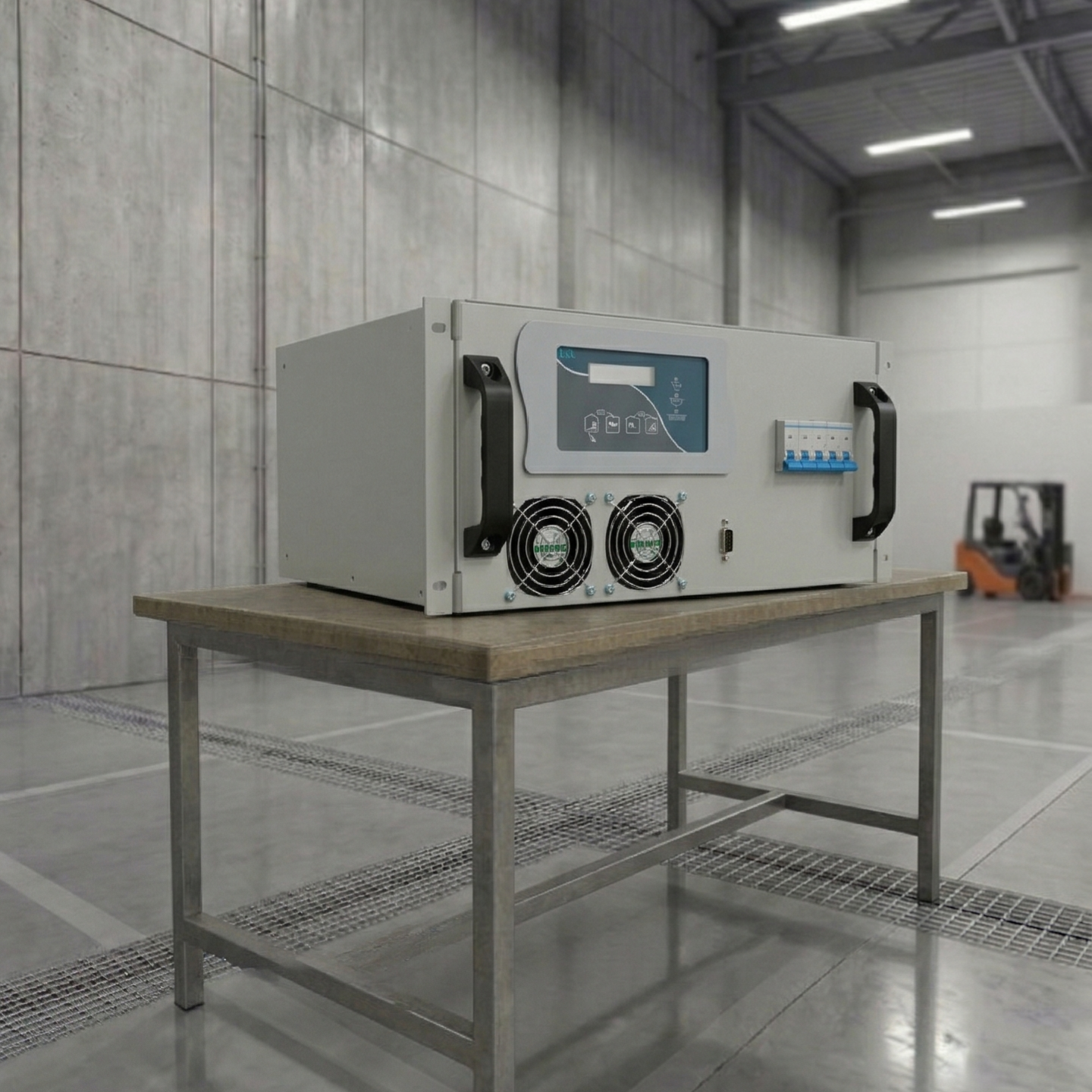
At its simplest, a rectifier converts AC from the mains into controlled DC. In an industrial setting, “controlled” is doing an enormous amount of work in that sentence. A proper industrial rectifier is simultaneously:
- A precision voltage source, holding the DC bus within tight tolerance regardless of load steps, mains sags, and temperature swings — because sensitive electronics hang directly on that bus.
- A battery management system, applying the correct float voltage to keep a battery healthy for a decade, switching to boost or equalise charge when the chemistry calls for it, and compensating charge voltage against battery temperature so summer does not cook the cells that winter undercharged.
- A current limiter, feeding a deeply discharged battery at a controlled rate instead of dumping whatever the transformer can deliver into it.
- A filter, keeping ripple on the DC output low enough that relays do not chatter, batteries do not age prematurely, and communication equipment does not hum.
- An alarm and monitoring node, reporting earth faults, mains failure, high and low DC voltage, charger failure, and battery circuit interruption to the plant’s SCADA or building management system.
Industrial Transfer Switch: How ATS and STS Systems Keep Critical Loads Running
A cheap rectifier does the first job approximately and ignores the rest. The gap between the two shows up three years later as a battery replaced at a third of its design life, or — far worse — as a battery that measured fine on float and delivered nothing when the grid finally went down.
Thyristor or Switch-Mode: Choosing the Right Topology, Not the Fashionable One
The rectifier market splits broadly into two families, and industrial buyers are routinely pushed toward whichever one the seller happens to stock.
Thyristor (SCR) controlled rectifiers are the traditional heavyweight solution: a robust transformer, a phase-controlled bridge, and filtering. They are electrically tough, inherently tolerant of dirty mains and harsh environments, straightforward to service with ordinary skills, and they scale to very large currents economically. For substation battery duty, electrolysis, and heavy industrial DC loads, they remain an outstanding choice — which is why utilities keep specifying them decades after some marketing departments declared them obsolete.
High-frequency switch-mode rectifiers offer higher efficiency, smaller footprints, modular hot-swap redundancy, and fine-grained digital control. In telecom power, data-centre DC plants, and space-constrained installations, modular rectifier shelves are the natural answer: an N+1 array of modules keeps supplying the load through the failure of any single unit, and a technician swaps the failed module without so much as an alarm horn.
Middle East Telecom Project – 15kVA 12-Pulse Industrial UPS System
The honest engineering answer is that both topologies have territories where they win, and a manufacturer that builds both can recommend on merit. EPC Enerji designs thyristor-controlled industrial chargers and modular systems alike, sized from tens of amperes for a small substation to the heavy DC demands of process industry — and its engineers are able to argue for the option that fits the project, because the company profits from solving the problem, not from clearing a particular warehouse shelf.
The Battery Deserves a Say in the Specification
A rectifier and its battery are one system, and the battery’s chemistry writes half of the rectifier’s requirements. Vented lead-acid, VRLA, and nickel-cadmium cells each want different float and boost voltages, different temperature compensation slopes, and different charging current limits. Nickel-cadmium — still the standard in many utility, rail, and oil and gas installations for its brutal tolerance of temperature and deep discharge — requires charging regimes that a generic charger simply does not offer.
This is where project-specific manufacturing pays for itself. When EPC builds a rectifier for a 220 VDC substation system on nickel-cadmium cells at 55°C design ambient, the charging characteristic, the cell count arithmetic, the end-of-discharge thresholds, and the boost interlocks are engineered for that installation. The alternative — adjusting a mass-market unit to approximately fit — is how batteries end up dying quietly on float.
Dual-branch arrangements matter here too. Critical installations frequently specify two rectifiers on one battery, or a main and standby charger with automatic changeover, or diode-decoupled redundant systems feeding a common bus. These architectures are routine work for EPC’s engineering team and appear throughout the company’s substation and industrial references.
Where These Machines Live
Utilities and Power Generation
Every switchyard, every generating unit, every grid control centre stands on a DC system, and national grid codes write hard requirements around it: autonomy times, voltage windows, earth-fault monitoring, alarm schedules. EPC Enerji supplies rectifier-battery systems into power plant and transmission projects where the acceptance test is witnessed, the documentation is audited, and the equipment is expected to outlast the engineers who commissioned it.
Oil, Gas, and Process Industry
Refineries and petrochemical plants run their emergency shutdown systems, instrumentation, and critical control loops on DC. The environment adds hazardous-area considerations, elevated ambient temperatures, and corrosive atmospheres; the operating philosophy adds a simple rule — the DC system fails last. Rectifiers for this world are built with margin everywhere: thermal, electrical, and mechanical.
Rail and Transportation
Signalling systems, level crossings, station services, and tunnel safety equipment all draw on battery-backed DC, charged by rectifiers that must tolerate the electrically noisy neighbourhood of a traction network. EPC’s transportation sector experience covers exactly this intersection of rough supply and unforgiving load.
Marine and Defense
Aboard ships and in defense installations, rectifiers charge starting batteries, feed weapon and communication systems, and hold emergency buses — under vibration, salt, shock, and inspection regimes that reject anything fragile. These programmes are a core part of EPC Enerji’s project history, and they shape the mechanical and documentation standards the company applies across its whole range.
Electroplating, Electrolysis, and DC Process Loads
Not every rectifier feeds a battery. Surface treatment lines, hydrogen electrolysis, and electrochemical processes need high-current, precisely regulated DC where output stability translates directly into product quality and energy cost. This is heavy power conversion engineering — transformer design, bus bar work, cooling strategy — and it is native territory for a manufacturer whose name is literally Energy Power Conversion.
Specification Points That Separate Serious Equipment from Catalogue Filler
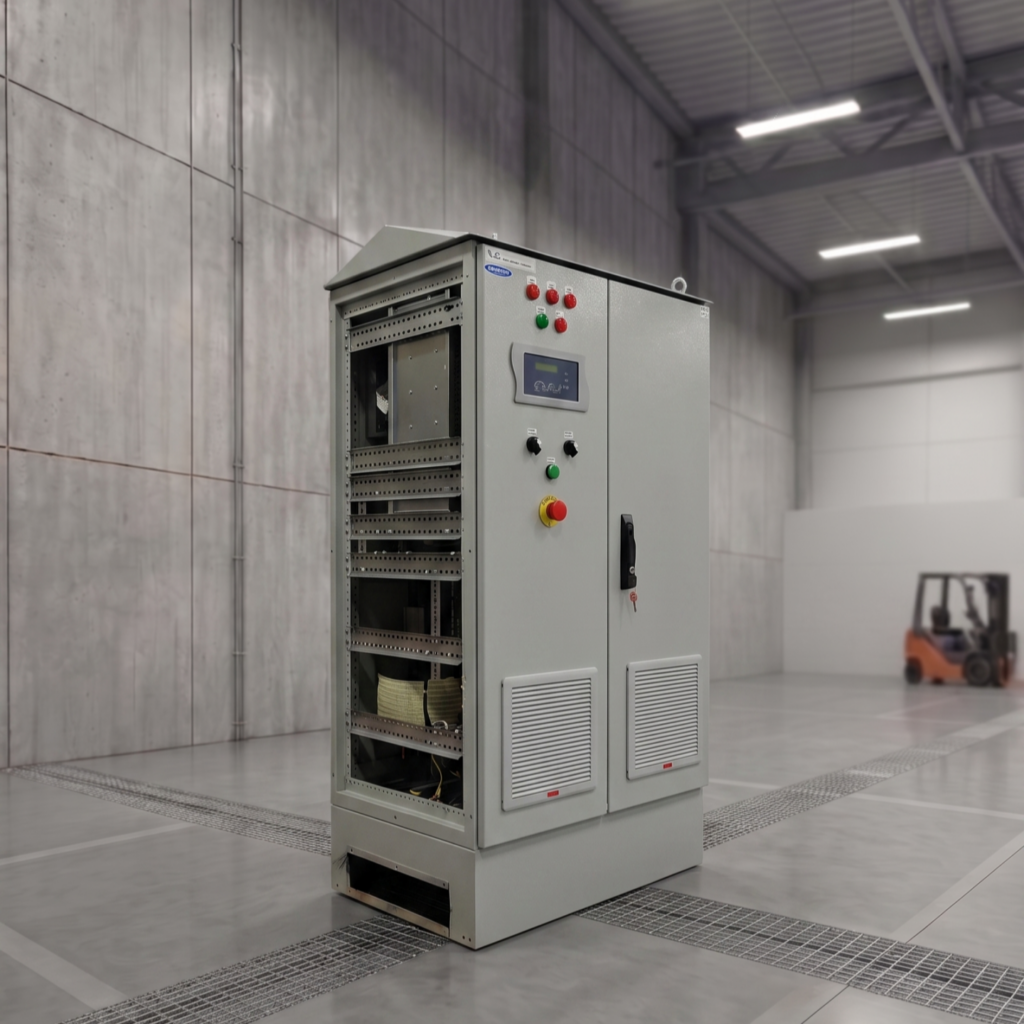
For anyone drafting or reviewing a rectifier tender, a short list of questions extracts the truth quickly:
- Ripple at the battery terminals, in millivolts or percent, with the battery disconnected. Low ripple with the battery acting as a filter is easy; low ripple without it is design quality.
- Regulation across the full mains tolerance band and load range — not just at nominal.
- Current limit behaviour into a discharged battery and into a bolted fault. Controlled, adjustable, documented.
- Temperature-compensated charging with an external battery sensor, not an internal approximation.
- Earth fault monitoring on floating DC systems, with sensitivity appropriate to the installation.
- Type test evidence and references in the relevant sector — utility, marine class, defense quality systems.
- Service reality: who answers the phone in year eight, and are spares a stock item or an archaeology project?
On that last point, manufacturing depth matters more than brochures admit. EPC Enerji builds its rectifiers at its own facility in Ümraniye, Istanbul, maintains a dealer and service network, and supports installations across the many countries it exports to. A rectifier is a twenty-year machine; buy it from someone who plans in decades.
Efficiency and the Total Cost Question
Rectifiers run continuously for their entire lives, so efficiency compounds in a way intermittent equipment never shows. The difference between 88% and 94% efficiency on a 100 A, 220 V system is roughly 1.5 kW of continuous loss — heat that is paid for twice, first at the meter and again in the air conditioning. Modern designs, whether well-executed thyristor units with efficient magnetics or high-frequency modular systems, keep those losses honest. When EPC engineers a system, the loss budget, the ventilation requirement, and the room heat load appear in the proposal, because the customer’s electricity bill is part of the design space whether the tender says so or not.
Anatomy of a Well-Specified DC System: A Worked Example
Abstract advice lands better with a concrete shape around it, so consider a representative project: a 154 kV transmission substation requiring a 110 VDC system for protection, control, and breaker operation, with eight hours of autonomy at the standing load plus a defined sequence of switching operations at the end of the period, in a room that reaches 45°C in August.
The battery decision comes first. The autonomy duty — long shallow discharge plus high-current breaker operations at the end — combined with the temperature points toward nickel-cadmium, sized from the manufacturer’s certified discharge tables at the design temperature down to the permitted end voltage, with cell count arithmetic that keeps float voltage, boost voltage, and end-of-discharge voltage all inside the 110 VDC system’s permitted window at the load terminals. That arithmetic is less trivial than it looks; it fails quietly when done by catalogue.
The rectifier follows from the battery: a thyristor-controlled charger rated for the standing load plus recharge current, with the recharge sized to restore the battery within the utility’s required window after a full discharge. Temperature-compensated charging with a sensor at the battery, adjustable current limiting, boost charge with interlocks that protect the connected load from elevated voltage — via dropper diodes or a dual-bus arrangement — and ripple held low enough at the battery terminals to protect both electronics and cells. Dual-charger redundancy with automatic changeover satisfies the utility’s availability requirement; earth fault monitoring on the floating bus satisfies its operational one, because finding the first earth fault before the second one arrives is how DC systems avoid becoming incident reports.
Around the electrical core sits the project reality: type test evidence for the utility’s approval, factory acceptance testing witnessed by its inspectors, seismic and environmental conformity for the site, and a documentation package that survives audit. This is a composite of projects EPC Enerji executes routinely, and the point of rehearsing it is simple — every line of it is a decision, and a manufacturer that engineers per project makes each decision for the installation rather than defaulting past it.
Commissioning and the First Year: Where Good Systems Prove It
A rectifier-battery system’s real acceptance test is distributed across its first year of service, and operators can stack the odds deliberately. At commissioning: an insulation check of the DC network, verification of float and boost voltages at the battery terminals (not the charger terminals — cable drop is a classic silent error), confirmation of current limit behaviour, an earth-fault test on each pole, and a genuine discharge test that proves the autonomy claim against a clock rather than a calculation.
Through the first year: monthly recording of float current and pilot cell readings, quarterly connection torque and thermal checks, and a repeat discharge test before the warranty conversation closes. Batteries announce their problems early to anyone taking measurements and to nobody else. The rectifier’s own contribution is to make this easy — accessible test points, honest metering, alarm contacts that actually annunciate — which is a design philosophy question settled at the factory. EPC builds its chargers around the assumption that a technician with a clipboard will visit regularly, because in the installations the company serves, one does.
Modernisation: Replacing the Charger Without Replacing the Room
A large share of the industrial rectifier market is not new construction at all but replacement — thirty-year-old chargers still floating batteries in substations, plants, and ships, functional but unsupportable, their manufacturers absorbed or vanished and their spare parts extinct. The replacement project has a distinctive shape: the battery, the cabling, the breaker positions, and often the cabinet footprint are fixed; the new equipment must be engineered into the existing interfaces with a changeover window measured in hours, because the DC system it feeds cannot simply be switched off.
This is bread-and-butter work for EPC Enerji’s engineering team: survey the existing installation, design the new charger to the old footprint and terminal arrangement, pre-stage and factory-test it completely, and execute the swap against a switching programme agreed with the operator — frequently with a temporary charger holding the battery during the change. The result is a modern, efficient, supportable machine inside a twenty-year-old single-line diagram, at a fraction of the disruption of rebuilding the room. For fleets of substations or sites, the survey-and-replace cycle becomes a rolling programme, which several of EPC’s utility and industrial customers run exactly that way.
Frequently Asked Questions
How long should an industrial rectifier last? Twenty years is a reasonable design expectation with periodic replacement of fans and filter capacitors. The battery it charges will typically be replaced once or twice within that span.
Can one rectifier serve the load and charge the battery simultaneously? Yes — that is the standard float arrangement. The rectifier carries the load and maintains the battery; the battery carries the load the instant the mains or the rectifier fails.
What happens if the battery is disconnected? A properly designed unit continues to feed the load within specification, with ripple still inside limits. If a vendor cannot state battery-off ripple, that silence is an answer.
Is modular always better? No — modular shines where hot-swap redundancy and footprint dominate; controlled thyristor rectifiers shine in high current heavy duty, harsh-environment, and utility applications. The right answer is application-driven, which is why talking to a manufacturer of both is worth the phone call.
Getting the DC System Right from the Start
The rectifier is the least glamorous purchase in the electrical package and the one whose failure modes are least forgiving. It rewards buyers who specify it around the real battery, the real environment, and the real consequence of losing DC — and who choose a manufacturer able to engineer to that specification rather than near it.
EPC Enerji designs and manufactures industrial rectifiers, battery chargers, and complete DC power systems in Istanbul, alongside its inverter, UPS, and frequency converter range, and delivers them into utility, marine, defense, transportation, and process industry projects worldwide. Share the DC system requirement — voltage, battery, autonomy, environment, standards — through epcas.com.tr, and EPC’s engineering team will come back with a system built for the installation it will actually live in.