

Industrial Energy Solutions: From Grid Connection to Energy Strategy

For most of industrial history, a factory’s relationship with energy was simple and passive: the grid delivered, the meter counted, the plant paid. That era is closing quickly. Energy prices swing with geopolitics, carbon accounting follows products across borders, customers audit their suppliers’ footprints, rooftops have become generation assets, ports demand shore power, and the vehicles in the yard increasingly charge instead of refuel. Energy has migrated from the facilities department’s cost line to the boardroom’s strategy agenda — and the plants navigating the shift well are the ones treating it as an engineering programme rather than a procurement reflex.
Industrial energy solutions, in the full sense, is that programme: generation, conversion, protection, storage, and consumption designed as one coherent system around the plant’s actual operation. It is territory EPC Enerji has grown into naturally, because the company’s power conversion portfolio — solar solutions, EV charging systems, rectifiers, inverters, industrial UPS, frequency converters, and voltage regulators, all engineered and manufactured in Istanbul — happens to be the toolbox the transition is built from.
The New Shape of a Plant’s Energy System
A generation ago, a facility’s single-line diagram had one energy source at the top and loads at the bottom. The modern industrial diagram looks different in kind, not just in degree.
Power now flows in from the grid and from the roof; solar generation on industrial buildings has moved from gesture to serious economics, with large roof areas, daytime-heavy load profiles, and payback periods that finance directors no longer argue with. Power flows out to vehicle fleets through charging infrastructure that is rapidly becoming as standard as compressed air. Between the two sit the conversion layers — inverters tying generation to the plant, rectifiers and DC systems feeding processes and protection, UPS and regulators defending the loads that pay for everything — and increasingly, storage that shifts energy across the hours of the day.
Each element is a familiar machine. The novelty — and the difficulty — is the system: making generation, storage, protection, and consumption cooperate under real tariffs, real weather, and real production schedules. That is a power conversion engineering problem from end to end, which is why manufacturers rather than installers are increasingly the right counterpart for it.
Solar for Industry: Where the Economics Are Won and Lost
Industrial solar succeeds or fails in the engineering details that rooftop-residential habits ignore. The load profile matters more than the panel count: plants consuming their own generation in real time capture full retail value from every kilowatt-hour, which makes matching array size to the daytime load curve — not to the available roof — the first economic decision. Power quality at the coupling point matters: inverter behaviour under grid disturbance, harmonic contribution, and protection coordination with the plant’s existing switchgear all belong in the design, not in the commissioning surprises. And the interaction with the plant’s critical power systems matters most of all: generation, UPS input windows, generator operation, and transfer schemes must be designed to coexist, because a solar system that confuses the standby architecture during a grid event has subtracted more value than it ever added.
EPC Enerji approaches industrial solar from exactly this systems angle — as one branch of its solar solutions portfolio and its wider conversion engineering — so the array, the inverters, and the plant’s existing power architecture arrive at the same single-line diagram on purpose. For facilities across Türkiye’s manufacturing base and in the sun-rich export markets EPC serves, this integration discipline is the difference between a solar investment and a solar complication.
Electrifying the Yard: EV Charging as Industrial Infrastructure
Fleet electrification has crossed from pilot to policy in logistics, municipal services, and corporate transport — and it lands on the facility as an electrical engineering project wearing a sustainability badge. Charging a fleet is a serious new load with its own peak behaviour, its own effect on the plant’s demand charges, and its own opportunities: scheduled overnight charging that fills the tariff valleys, coordination with rooftop generation so the fleet absorbs midday solar, and load management that keeps the connection capacity honest.
EPC Enerji manufactures electric vehicle charging systems as a distinct product family and — more importantly for industrial customers — engineers them into the facility’s power architecture: distribution capacity, protection, power quality, and management, handled by the same team that builds the plant’s UPS and regulators. The EV charging sector is one of EPC’s named focus areas precisely because charging is, at its core, power conversion — the company’s home discipline.
What Are Industrial Rectifier Systems? Applications, Benefits & Types
The Defensive Layer: Efficiency and Power Quality as Energy Measures
The least romantic energy solutions remain the most profitable, and they live inside the equipment the plant already depends on.
Conversion efficiency compounds relentlessly: equipment that runs continuously — rectifiers floating batteries, UPS systems carrying critical buses, converters feeding imported lines — turns every percentage point of loss into a permanent tax paid twice, once at the meter and once through the cooling plant. Modern high-efficiency designs, and honest partial-load efficiency figures (where redundant systems actually operate), belong in every energy programme’s arithmetic. So does modernisation: replacing a decades-old rectifier or rotary converter with a current design frequently pays for itself on losses alone, and EPC treats such retrofits — new equipment engineered into existing electrical and mechanical interfaces — as a standing service line.
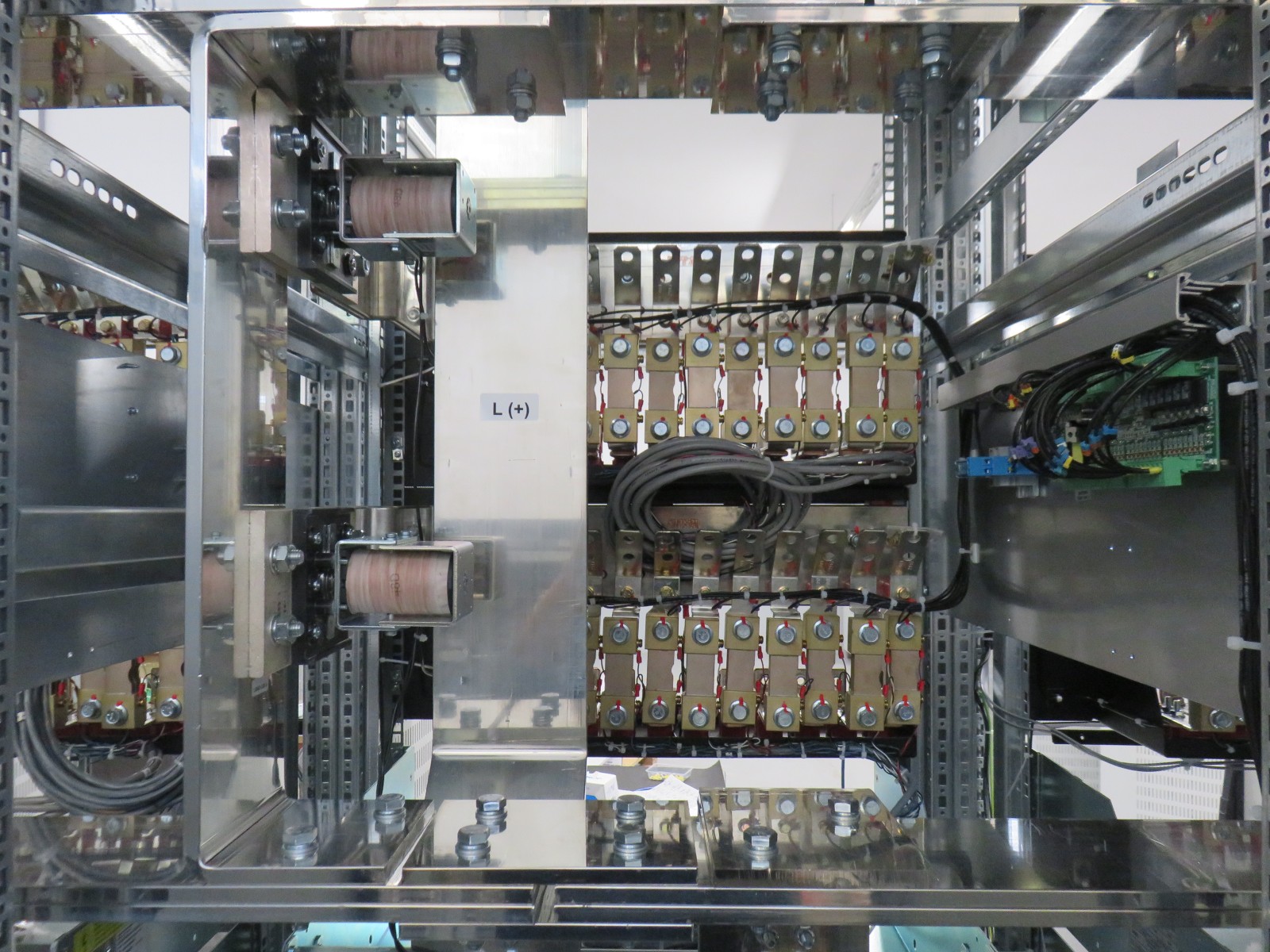
Power quality is the other quiet lever. Chronic undervoltage and unbalance make every motor in a facility draw more current for the same work; a properly sized three phase voltage regulator at the main board corrects the entire plant at once, and the return arrives as motor life, drive uptime, and process consistency as much as on the meter. Harmonics, reactive power, and transfer behaviour round out the discipline. None of it photographs well for the sustainability report; all of it shows up in the operating accounts.
Energy Strategy Across EPC’s Sectors
The energy transition wears different uniforms across the industries EPC Enerji serves, and the company’s cross-sector position gives it an unusually complete view of it.
Manufacturing plants combine rooftop generation, efficiency retrofits, power quality correction, and fleet charging into programmes driven equally by cost and by customers’ supply-chain carbon requirements — the export manufacturer’s new reality.
Ports and marine operators face shore power head-on: cold ironing installations that let vessels shut down their diesels at berth, built around exactly the frequency conversion and heavy power engineering that EPC’s marine references are made of. Few applications express the energy transition as concretely as a silent ship on a clean quay.
Oil & Gas Sector (Jordan) – 40kVA Multi-Cabinet Industrial UPS System Design and Manufacturing
Transportation networks electrify at every layer — rail traction support systems, station and tunnel infrastructure, depot charging — while their signalling and safety systems continue to demand the battery-backed critical power that has long been EPC territory.
Energy and utilities absorb renewables at grid scale while hardening the DC and auxiliary power systems that keep the grid itself controllable — both sides of which are power conversion problems.
Telecommunications and data infrastructure chase efficiency inside relentless growth: rectifier plants, UPS architectures, and cooling loads audited kilowatt by kilowatt, with solar increasingly layered onto sites.
Defense installations pursue energy resilience — the ability to operate through grid loss — which turns out to be the critical power discipline under a strategic name.
The pattern across all of them: the energy agenda and the reliability agenda have merged, and the machinery serving both is the same machinery. A manufacturer fluent in rectifiers, inverters, UPS, converters, regulators, solar, and charging is fluent in the transition itself.
Building the Programme: A Practical Sequence
Facilities that navigate this well tend to follow a recognisable order, and it is worth stating plainly.
First, measure: a proper survey of consumption, load profiles, power quality at the incoming supply, and the condition and efficiency of existing conversion equipment. Reality consistently surprises the assumptions. Second, fix the defensive layer: regulation, efficiency retrofits, and power quality — the investments with the shortest paybacks and the ones that make every later step perform better. Third, add generation sized to the measured load profile, engineered into the protection and standby architecture from the first drawing. Fourth, electrify consumption — fleets, processes — with load management designed against the tariff and the generation curve. Fifth, keep the critical power backbone ahead of all of it, because a plant that saves energy but loses availability has negotiated badly with itself.
Custom Power Electronics Manufacturer: What to Look For Before You Commit
At every step, the decisive advantage is engineering continuity: one counterpart that measures, designs, manufactures, tests, and services across the whole sequence. That is the working definition of industrial energy solutions as EPC Enerji practises it — from its Ümraniye, Istanbul facility, through witnessed factory testing, into commissioning and a service relationship built for the decades the equipment will serve, across Türkiye and the growing list of countries in its export portfolio.
One Plant’s Transition, Told Concretely
Principles persuade engineers; sequences persuade boards. So consider a composite drawn from real engagements: an export-oriented manufacturer with a 12,000 m² roof, a daytime-heavy load profile, a delivery fleet scheduled for electrification under a customer’s logistics requirements, chronic voltage complaints in the machining hall, and a European client whose supplier code now requests carbon reporting with reduction evidence.
The programme opened with measurement — a month of recording at the incoming supply and the main process buses, plus an efficiency survey of the existing conversion equipment. The findings reordered the plan immediately: the machining hall’s problems traced to sustained undervoltage and unbalance, not to the machines; the twenty-year-old rectifier plant floating the process DC bus was running at an efficiency that made its replacement a two-year payback on losses alone; and the measured load profile showed the roof could host an array covering a substantial share of daytime consumption with essentially full self-use.
Execution followed the disciplined order. Year one: a three phase voltage regulator at the main board and the rectifier modernisation — the defensive layer, cheapest and fastest, immediately harvesting motor life, uptime, and loss savings. Year two: the rooftop array, engineered from the first drawing against the plant’s protection scheme, its generator, and its UPS input windows, so the standby architecture and the generation never met by surprise. Year three: depot charging for the fleet, with load management scheduled against the tariff valleys and the solar curve, keeping the grid connection capacity — and its costs — unchanged.
The outcome the board quotes is financial; the outcome the engineers quote is architectural: one single-line diagram, designed on purpose, in which every addition strengthened rather than complicated the plant. And the outcome the sales director quotes is the carbon report that satisfied the European client’s supplier audit. All three were the same project. EPC Enerji’s role across such programmes — surveyor, engineer, manufacturer, and long-term service counterpart from one Istanbul base — is precisely what allows the three outcomes to remain one project instead of dissolving into three vendors’ territories.
Industrial Power Supply Solutions: Designing Power as a System, Not a Shopping List
Financing the Programme: Making the Numbers Legible
Industrial energy projects live or die in the finance review, and the engineering side can make that review easy or impossible. The programmes that clear approval share habits worth copying. They price the baseline honestly first — the measured cost of the status quo, including the symptom costs (motor rewinds, drive failures, scrap, downtime) that voltage and quality problems scatter across maintenance budgets where nobody sums them. They present efficiency retrofits on total cost of ownership over the equipment’s real horizon, where continuously-running conversion losses compound into figures that surprise every first-time reviewer. They size solar on self-consumption economics under the actual tariff, not on installed-capacity vanity. And they stage capital along the payback gradient — defensive layer first, generation second, electrification third — so early savings visibly fund later phases and the programme builds credibility as it spends.
Critical Power Systems: Reliable UPS, Battery, and Backup Power Solutions
The manufacturer’s contribution to this legibility is data: loss schedules, efficiency curves at real operating points, measured baselines, and equipment lifetimes grounded in an installed base rather than in optimism. EPC Enerji supplies proposals in exactly this form because its industrial customers’ capital processes demand it — and because equipment that wins on honest twenty-year arithmetic is the equipment the company builds.
Resilience and Transition: The Same Investment, Twice Valuable
A closing observation that deserves promotion from footnote to principle: nearly every energy transition investment, correctly engineered, doubles as a resilience investment — and the converse. The rooftop array that cuts the bill also keeps daytime processes alive through grid disturbances when integrated with the plant’s storage and transfer architecture. The modernised rectifier plant that repaid itself on losses also restored the DC autonomy the old chargers had quietly lost. The regulator bought for motor life also holds the UPS rectifiers and the solar inverters inside their comfortable windows through the grid’s bad afternoons. The charging infrastructure scheduled against tariffs is, in its power electronics bones, the same DC conversion engineering that critical power systems are made of.
Plants that grasp this duality stop running two programmes — one for sustainability, one for reliability — and run one energy programme with two returns. It requires only that the same engineering mind hold both agendas, which is organisationally rare among vendors split into product silos and structurally natural for a power conversion manufacturer whose range spans both. That, in the end, is the case for bringing the whole question to EPC Enerji rather than distributing its pieces: the company’s portfolio — solar, charging, UPS, rectifiers, inverters, converters, regulators — is not a catalogue of separate answers but a single discipline, energy power conversion, applied across every place a modern plant’s energy strategy touches.
Frequently Asked Questions
Where does the fastest payback usually hide? In the defensive layer: voltage regulation for facilities on poor supply, and efficiency retrofits of old continuously-running conversion equipment. Solar follows closely where roof area meets a daytime load profile.
Can solar, charging, and critical power really be designed together? They must be — the failure modes of designing them separately (generator conflicts, protection miscoordination, demand charge surprises) are precisely the expensive ones. Single-team engineering exists to prevent them.
Does EPC serve export projects with full documentation? Yes; the company ships engineered systems internationally with the certification, testing, and documentation packages its defense, marine, and utility customers have long required.
Is battery storage part of the picture? Increasingly, wherever tariff structures and load profiles justify shifting energy across the day — and it arrives naturally on the same DC-bus engineering that EPC’s charger and inverter ranges are built on.