

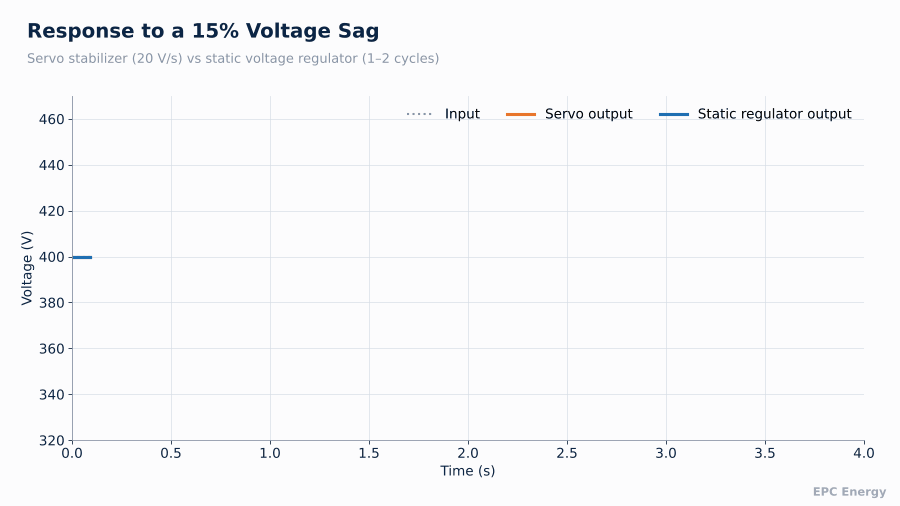

DC Power Supply for Railway Signalling and Point Machines
On a railway, very few things are allowed to fail quietly. A signal that goes dark defaults to danger and stops trains. A set of points that loses power in mid-throw leaves a route unproven, and the interlocking will not clear a signal over it. Either way, traffic stops. The railway DC power supply behind […]

Modular Rectifier Systems: N+1 Redundancy with Hot-Swap Power Modules
There are two ways to build a 700 A DC power supply. You can build one large rectifier: a transformer, a thyristor or diode bridge, a filter and a controller, all sized for 700 A. Or you can build it from dozens of small, identical power modules running in parallel on a common bus. Both […]

6-Pulse vs 12-Pulse Rectifiers and UPS: Harmonics, THD and When 12-Pulse Pays Off
Every three-phase rectifier draws current from the grid in pulses rather than as a clean sine wave. The number of those pulses per mains cycle, six or twelve in most industrial equipment, decides how much harmonic distortion the rectifier pushes back into the supply, how much ripple appears on the DC output, and how large […]

Earth Leakage Detection in Unearthed DC Systems
Most industrial DC auxiliary systems in substations, power plants, railways and ships are deliberately left unearthed. Neither the positive nor the negative pole is connected to earth. The system floats. The reason is availability. In an earthed system, a single insulation fault is a short circuit: a fuse blows and part of the system goes […]

Dropper Diodes in DC Systems: Keeping Load Voltage Safe During Boost Charge
A nickel-cadmium battery on a 110 V DC system does not sit at 110 V. Fully charged and floating, a typical 92-cell string sits at about 129 V. During boost or commissioning charge, it climbs above 142 V. Near the end of a long discharge, it falls to around 101 V. The loads connected to […]

3-Pole vs 4-Pole Static Transfer Switch: Neutral Switching Explained
A static transfer switch moves a critical load from one AC source to another in a quarter of a cycle. Most discussions of STS focus on that speed: thyristor switching, transfer time, the ITIC curve. We have covered those topics in our STS vs ATS article. This article is about a decision that comes earlier […]

Heavy-Duty Battery Cabinet Oil and Gas Systems
When an industrial UPS or DC system is specified for an oil and gas facility, the attention goes to the rectifier, the inverter, and the control system. The battery and the breaker that connects it often appear as one line at the end of the specification: “battery cabinet, autonomy 2 hours, with breaker”. That line […]

Power Electronics for High-Ambient Sites: Designing UPS and Rectifiers for 50 °C Deserts
Most UPS and rectifier datasheets are written for a room at 25 °C, with full rating guaranteed up to 40 °C. That is a reasonable assumption for an office building in Europe. It is not a reasonable assumption for a UPS for high ambient temperature operating at a pumping station in Jordan, a refinery in […]

AC/DC Auxiliary Power Package for Power Plant EPC Contractors: What to Specify
On a power plant project, the power plant auxiliary power system is a small line in a large budget. It is also one of the systems with the longest list of interfaces: the DCS, protection, turbine controls, switchgear, emergency lube oil pumps, fire and gas, telecom, lighting. When it goes wrong, it rarely goes wrong […]

48V DC Power Systems for Telecom and Data Centers: Sizing, LVD and Fuse Monitoring
Telecom equipment has run on -48 V DC for more than a century, and the reasons have not changed much. The voltage is low enough to be treated as safety extra-low voltage in most jurisdictions, high enough to keep conductor currents manageable, and it can be backed up by a battery string with no conversion […]

Custom DC Power Supply for Industrial Applications: Voltage, Current and Design Requirements
Catalogue DC power supplies cover a huge range of needs. If you want 24 V at 10 A for a control panel, there are dozens of good options and you should buy one. But industrial projects regularly fall outside that range: an unusual voltage, a current in the hundreds or thousands of amperes, a load […]

Three Phase Frequency Converter for Industrial Machinery: Sizing and Purchasing Guide
A US-built machine tool arrives at a factory in Europe, Turkey or the Middle East. Its nameplate says 480 V, 60 Hz. The plant supply is 400 V, 50 Hz. Someone suggests a transformer to fix the voltage, and for a while it seems to work. Then the spindle runs about 17% slow, the hydraulic […]

Industrial Rectifier Price Guide: What Affects the Cost of Custom DC Power Systems?
Buyers often send us two rectifier quotations and ask why one costs 40% more than the other. Usually both quotes are honest. They just describe different machines. One includes a 12-pulse transformer, a filter sized for 1% ripple without battery and a witnessed heat run; the other uses a 6-pulse bridge, measures ripple with the […]

Industrial UPS for DCS and PLC Systems: Sizing, Redundancy and Battery Autonomy
A distributed control system can be designed with redundant controllers, redundant networks and redundant I/O, and still go down because of one breaker in the wrong place. We’ve seen it happen. The power supply to a control system is often treated as an electrical detail that the electrical team handles while the automation team focuses […]

400Hz Frequency Converter for Aviation and Defense: Specifications and RFQ Guide
Aircraft electrical systems run at 400 Hz for a simple reason: weight. Transformers and motors get smaller as frequency rises, and on an aircraft every kilogram counts. Military ships, radar systems, missile systems and many avionics test benches adopted the same frequency for the same reason, or because they need to power equipment designed for […]

Marine UPS Systems: Technical Specifications for Shipbuilding and Offshore Projects
A UPS on land lives a quiet life. It sits on a level floor, in a room with stable temperature, connected to a grid that rarely misbehaves. A UPS on a ship doesn’t get any of that. It’s bolted to a structure that rolls, pitches and vibrates continuously. Its supply comes from generators that dip […]

Custom High Current Rectifiers: 500A, 1000A and 1200A DC Power Solutions
Building a 20 A rectifier is straightforward. Building a 1200 A rectifier is a different job. At high current, almost every design decision is dominated by one fact: losses scale with the square of current. A connection that is perfectly adequate at 50 A becomes a hot spot at 1000 A. A semiconductor drop of […]

Industrial Battery Charger Manufacturer: How to Specify a Custom Charging System
Most industrial battery charger problems we’re asked to fix were baked in at the specification stage. The charger works, technically. It produces the right voltage. But it’s charging a NiCd battery with a lead-acid profile, or it has no temperature compensation in a 40 °C room, or its ripple was measured with the battery connected […]

Heavy Duty UPS Systems for Oil & Gas: How to Specify the Right Solution
On an oil and gas facility, the UPS doesn’t protect office computers. It keeps the emergency shutdown system alive, powers fire and gas detection, holds the distributed control system up during a power dip, and keeps telecoms running when everything else has gone dark. If it fails at the wrong moment, the consequence isn’t lost […]

220V DC Rectifier Systems for Power Plants: Technical Requirements and Supplier Selection
There’s a moment in every turbine trip that power plant engineers think about more than they’d like to. The unit is offline, the shaft is still spinning at thousands of rpm, and the main AC supply to the auxiliaries has gone. For the next several minutes, the bearings need oil. The only thing standing between […]

110V DC Battery Charger for Substations: Sizing, Specifications and Procurement Guide
Ask a protection engineer what the most important piece of equipment in a substation is and you might expect them to name a transformer or a circuit breaker. Many will tell you it’s the battery. When a fault happens, the relays that detect it and the trip coils that clear it run on DC. If […]

Industrial UPS Price Guide: Cost Factors, Specifications and RFQ Checklist
“How much does a 20 kVA industrial UPS cost?” We get that question every week, usually by email, often with nothing else attached. It’s a fair question. It is also one we can’t answer honestly without asking six more, because two industrial UPS systems with the same kVA on the nameplate can differ in price […]
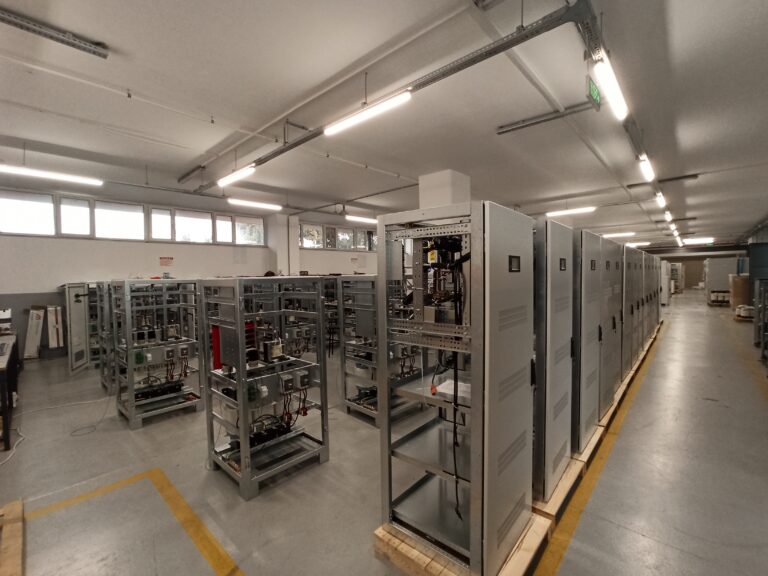
Tailor Made Power Solutions: What Custom Engineering Actually Means, Step by Step
“Custom” is a word that survives contact with almost any marketing department. In power electronics it can mean anything from a genuinely bespoke design to a standard product with a different paint colour and an extra terminal block. The distinction is worth pinning down, because the projects where it matters are exactly the projects where […]
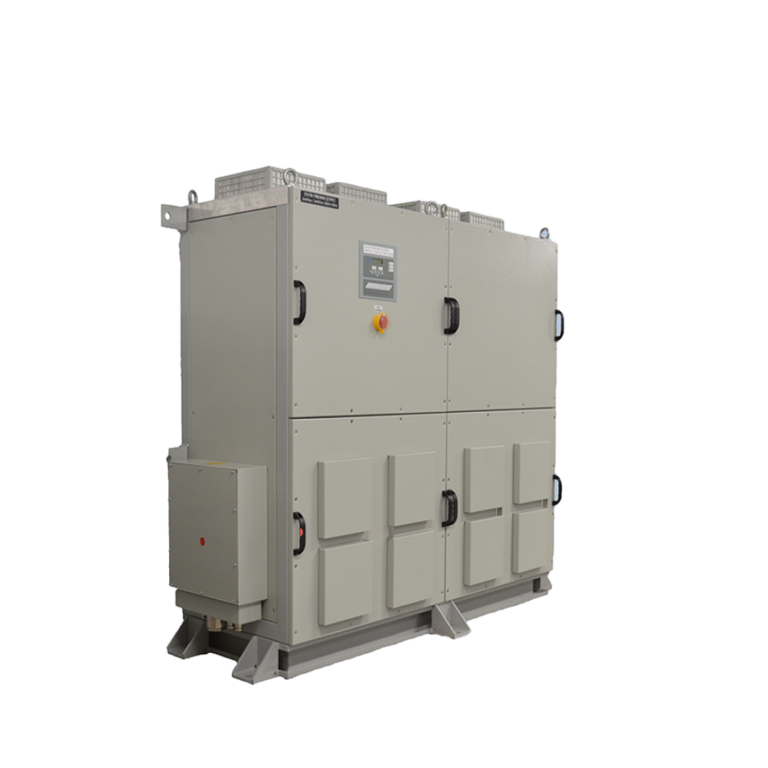
Frequency Converter Manufacturers: Why This Is Almost Never a Stock Item
Most industrial power equipment can be bought from a catalogue if the application is ordinary enough. Frequency converters are the exception. The reason is straightforward: a frequency converter exists because two electrical systems that were never meant to meet now have to, and the specifics of that mismatch are different every time. A 400 V […]

What Separates a Real Industrial Rectifier Manufacturer: Capability Is Proven at the Extremes
Any competent electronics company can build a 20 A rectifier. The population of companies that can build a 1200 A DC system, prove it at full load before shipment, and still be supporting it in twenty years is much smaller. That is the useful thing about rectifiers as a category: capability scales visibly. Current, thermal […]

Choosing an Industrial UPS Manufacturer: How to Tell a Builder from an Assembler
There are perhaps a few hundred companies worldwide describing themselves as industrial UPS manufacturers. A considerably smaller number actually design and build the equipment. The rest buy modules, populate a cabinet, add a logo and a warranty, and ship it. For an office building, that distinction barely matters. For a refinery, a substation, a metro […]
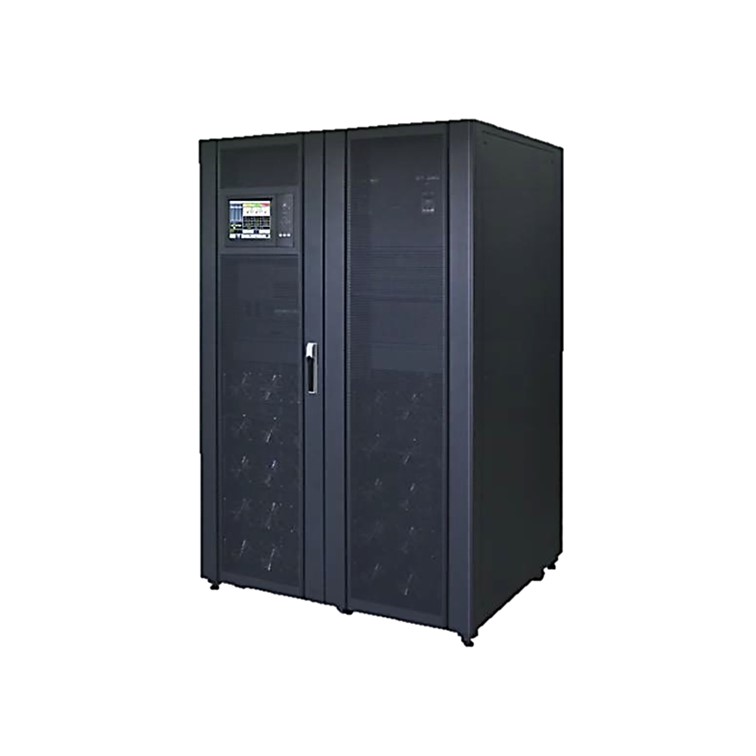
Industrial UPS vs Commercial UPS: The Engineering Differences That Decide Whether It Survives
Both products convert AC to DC, store energy in a battery, and convert back to AC. Both are sold as uninterruptible power supplies. Beyond that, they share very little — and the gap between them is where a substantial number of process plants have learned an expensive lesson. The problem is that the two look […]

STS vs ATS: Transfer Time, the ITIC Curve, and Which One Belongs Where
Two pieces of switchgear both promise the same thing: if source A fails, the load keeps running on source B. They cost an order of magnitude apart, and they are not substitutes for each other. Specifying the wrong one is one of the more common and more expensive mistakes in critical power design, because the […]

Running 60 Hz Equipment on a 50 Hz Supply: What Actually Fails, and How to Convert Properly
A plant buys a used packaging line from Texas. It arrives, the electricians look at the nameplate, and there it is: 460 V, 3-phase, 60 Hz. The local supply is 400 V, 50 Hz. Somebody suggests a step-up transformer and a trial run. Somebody else says the motors will just run a bit slower and […]

What is TN, TT and IT Systems
Insulation fails somewhere in the plant and a live conductor touches a metal enclosure. Everything that happens next, whether a breaker clears the fault in a fraction of a second, whether a residual current device sees anything at all, whether the enclosure sits at a dangerous voltage while production continues, is decided by a choice […]

Origin of Electric Frequencies
Look at the nameplate of any motor, transformer or power supply in your plant and you will find a number printed next to the voltage: 50 Hz, or 60 Hz, or occasionally 400 Hz. It looks like a specification handed down by physics. It is not. There is no natural law that makes fifty cycles […]

Industrial Energy Solutions: From Grid Connection to Energy Strategy
For most of industrial history, a factory’s relationship with energy was simple and passive: the grid delivered, the meter counted, the plant paid. That era is closing quickly. Energy prices swing with geopolitics, carbon accounting follows products across borders, customers audit their suppliers’ footprints, rooftops have become generation assets, ports demand shore power, and the […]

Critical Power Systems: Reliable UPS, Battery, and Backup Power Solutions
There is a category of electrical load whose defining property is that failure is not priced in money. The protection relay that must trip the moment a transformer faults. The tunnel ventilation controller during a fire. The operating theatre in minute forty of a procedure. The navigation bridge of a vessel in a shipping lane. […]
Industrial Power Supply Solutions: Designing Power as a System, Not a Shopping List
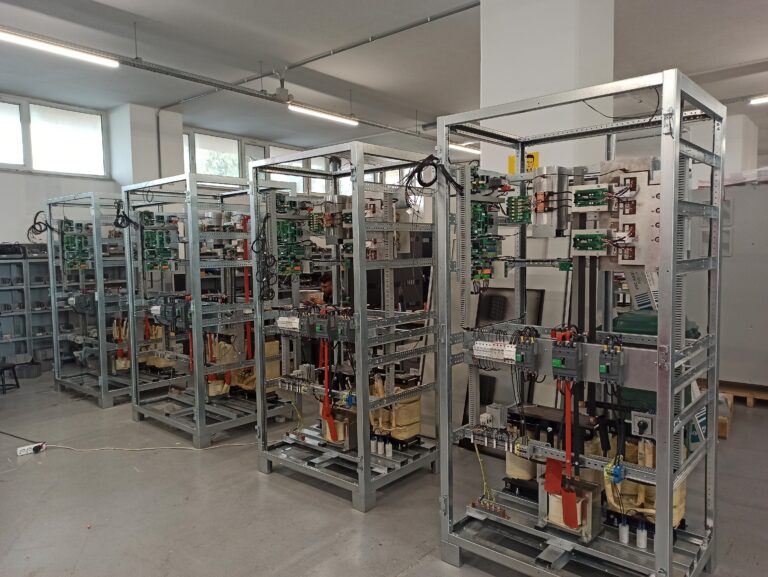
Every industrial facility eventually accumulates a power supply architecture. The question is whether anyone designed it. Walk through a typical plant that grew organically and you will find the archaeology: a UPS bought for the server room in one decade, a battery charger added with the substation in another, a voltage regulator installed after a […]

What is Three Phase Voltage Regulator?
Voltage problems rarely introduce themselves honestly. They arrive disguised as other people’s failures: motors that run hot for no reason, LED lighting replaced twice a year, drives that trip at the same hour every afternoon, welds that vary from shift to shift, a CNC machine that throws alarms whenever the compressor next door starts. Maintenance […]

Industrial Frequency Conversion: Connecting 50 Hz, 60 Hz and 400 Hz Systems Efficiently
The world never agreed on a single electrical frequency, and industry has been paying the bill ever since. Europe, most of Asia, and Africa settled on 50 Hz. The Americas and parts of Asia run 60 Hz. Aviation and much of the defense world standardised on 400 Hz. Ships carry whichever frequency their builders chose, […]
What is Industrial UPS?
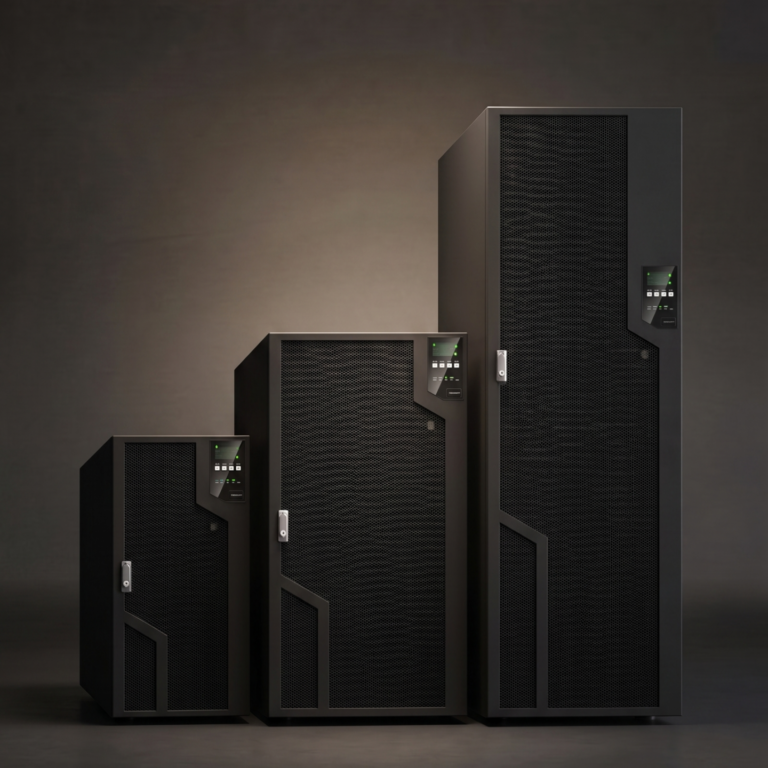
There is a specific moment, familiar to anyone who has commissioned a factory, when somebody suggests protecting the process control system with the same kind of UPS that sits under a desk in the accounting department — just a bigger one. It sounds economical. It is how DCS servers end up rebooting during a voltage […]
What Are Industrial Rectifier Systems? Applications, Benefits & Types
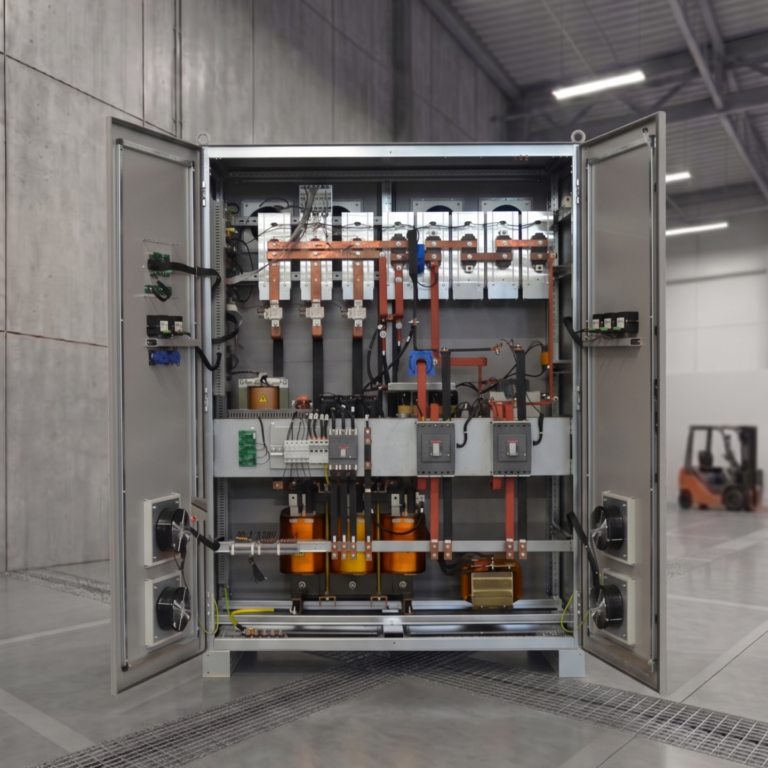
Ask an operations manager to list the critical equipment in their facility and you will hear about turbines, compressors, servers, and switchgear. Almost nobody mentions the rectifier. Yet in a substation, a telecom exchange, an electrolysis line, or an offshore platform, the industrial rectifier is the machine that everything else quietly depends on. It charges […]
What is Industrial Inverter
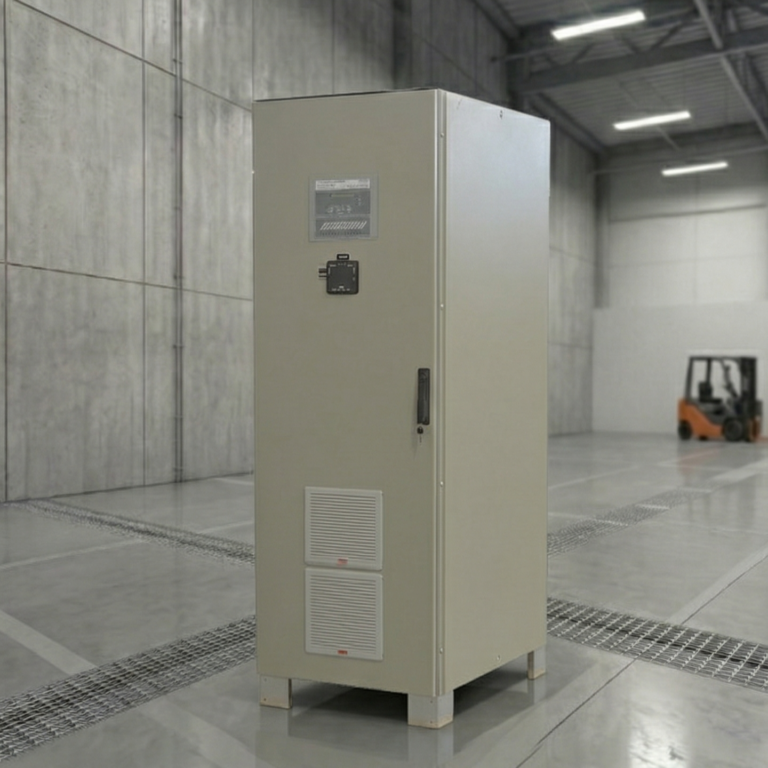
Walk through the switchgear room of a modern facility and count the loads that would happily run on the raw grid alone. There are fewer than most people assume. Somewhere between the battery bank, the solar array, the shore connection, or the DC bus of a traction substation, a device has to take direct current […]

Middle East Energy – Global Energy Event – 1 – 3 September 2026
The EPC team is gearing up for Middle East Energy 2026. It’s always a great opportunity to connect with industry partners and talk about the real challenges and innovations in power conversion across the region. If you’re attending, let’s catch up and talk power. 📍 Dubai World Trade Centre 📅 1–3 September 2026 🏢 Stand […]

Industrial Transfer Switch: How ATS and STS Systems Keep Critical Loads Running
Ask anyone who runs a data hall, a pumping station, or a hospital basement what they fear most about the grid, and they rarely say “an outage.” Outages are expected. What they actually fear is the half second of confusion when one source drops and another has to take over. Get that handover wrong and […]

Custom Power Electronics Manufacturer: What to Look For Before You Commit
There is a moment in a lot of industrial projects where the standard catalogue runs out of answers. The voltage window is unusual, the ambient is brutal, the footprint is fixed, the load profile does not match anything a distributor stocks, or a certification body wants documentation that an anonymous gray-box supplier simply cannot produce. […]

Our Participation in the Cambodia – Vietnam Sectoral Trade Delegation Program
We participated in the Sectoral Trade Delegation in Phnom Penh, Cambodia, and Ho Chi Minh City, Vietnam, between November 5-10, 2023.

We participated in the RIYADH Chamber of Commerce B2B Meetings.
We participated in the Riyadh Chamber of Commerce B2B meetings.

Our Participation in MEE Dubai 2023
We are delighted to be among the manufacturing companies participating in such a significant event (MEE Dubai 2023). Therefore, we invite all companies interested in exploring high-quality products, customized designs, and innovative complete system solutions.

We Attended the Hannover Exhibition 2023
We were delighted and excited to meet with old friends, new friends, and our customers.

Our Participation in JORDAN Exhibition
Our participation in the JIMEX 2023 Amman – JORDAN exhibition, together with our representative EFFECİENCY ENGINEERING COMPANY.

Morocco Trade Delegation for the Electrical and Electronics Sector, September 19-22, 2023
Morocco, a great country, presented a significant opportunity to gain new friends and family members.

Our Participation at Electric & Power Indonesia 2023 Exhibition
September 13-16, 2023 Jakarta International Expo (JI Expo), Trade Mart Building (Gedung Pusat Niaga) Arena JIEXPO Kemayoran, Central Jakarta 10620, INDONESIA – (HALL A3)
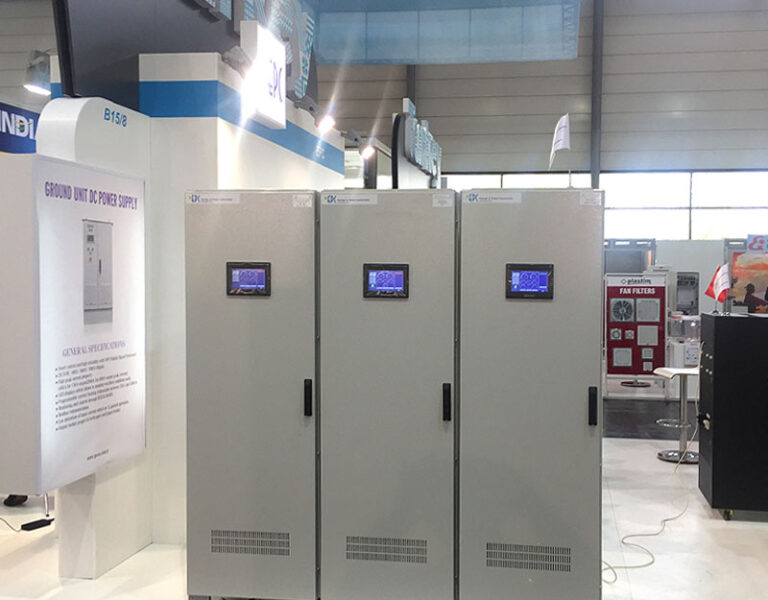
We Participated in Hannover Messe 2017
Our stand at the MESSE 2017 fair, held in Hannover, Germany, from April 24-28. This fair is among those we participate in annually. We extend our thanks to all our visitors.
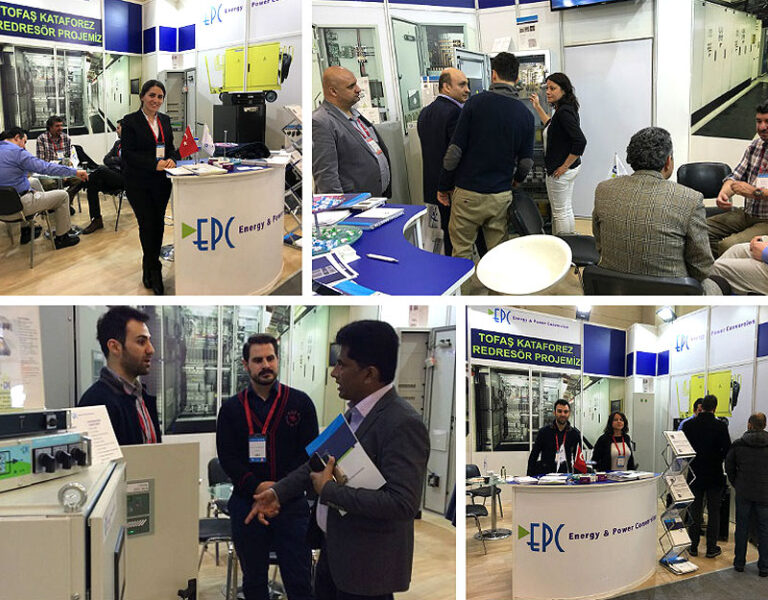
We Participated in WIN Automation 2016
Images from our WIN Automation 2016 Stand, one of the fairs we regularly attend every year.

Hitachi Visits Our Company
Representatives from world-renowned Hitachi visited our company and inspected our production facility and products on-site. Discussions were held for our future projects.