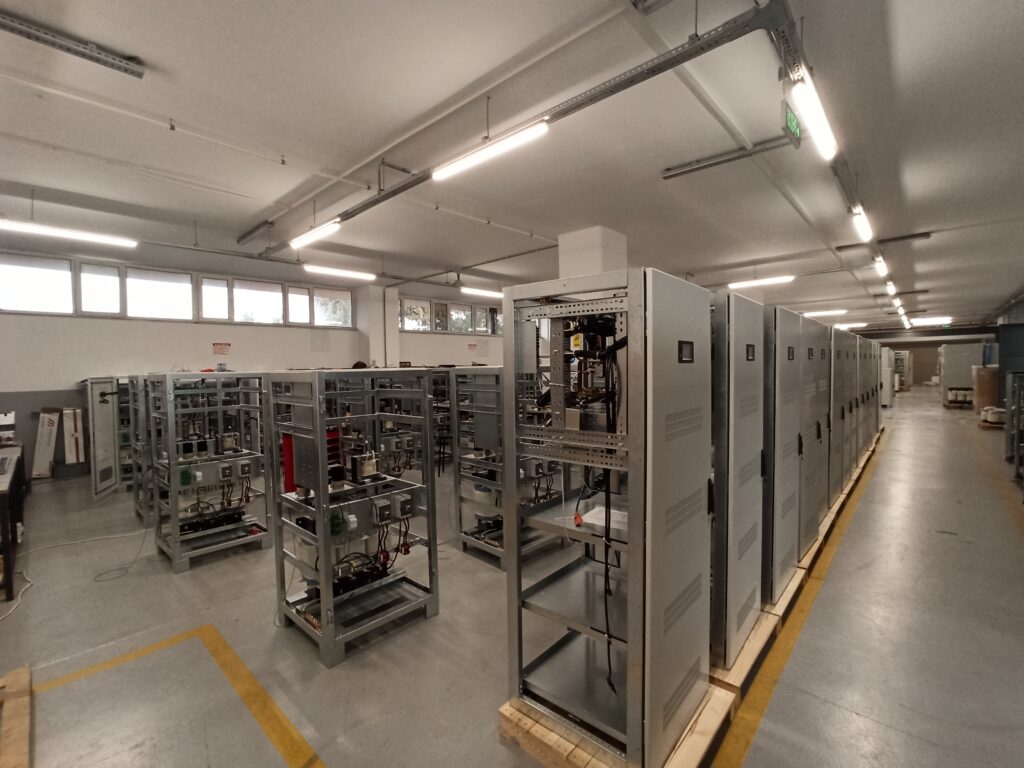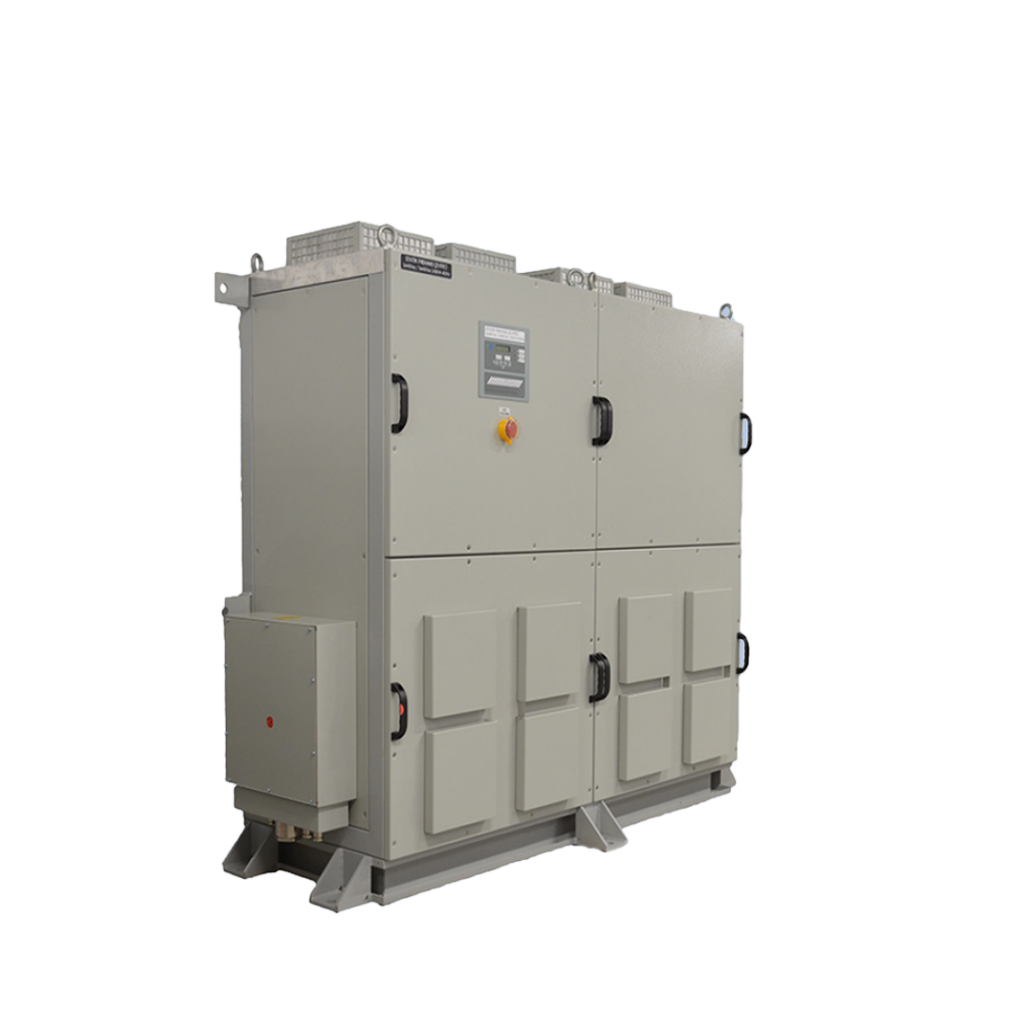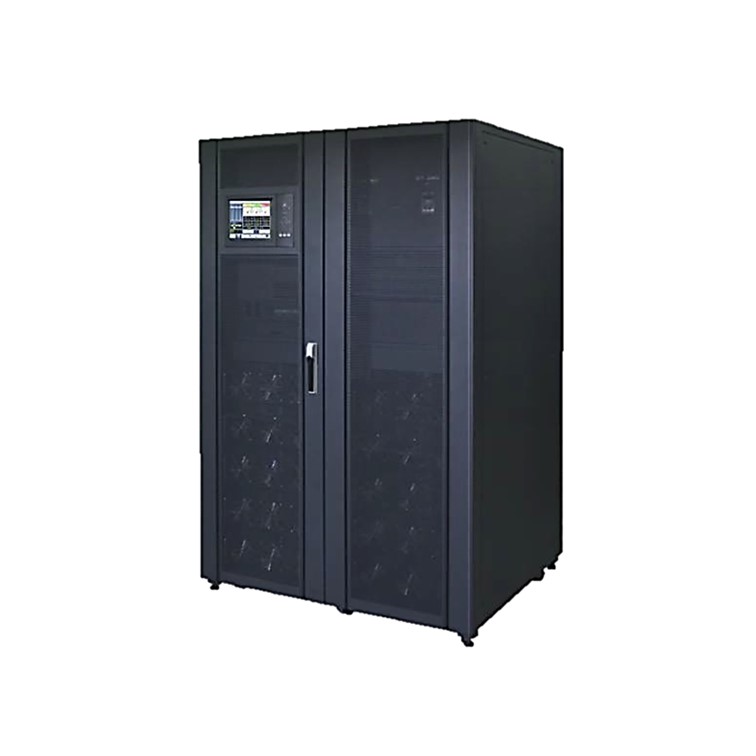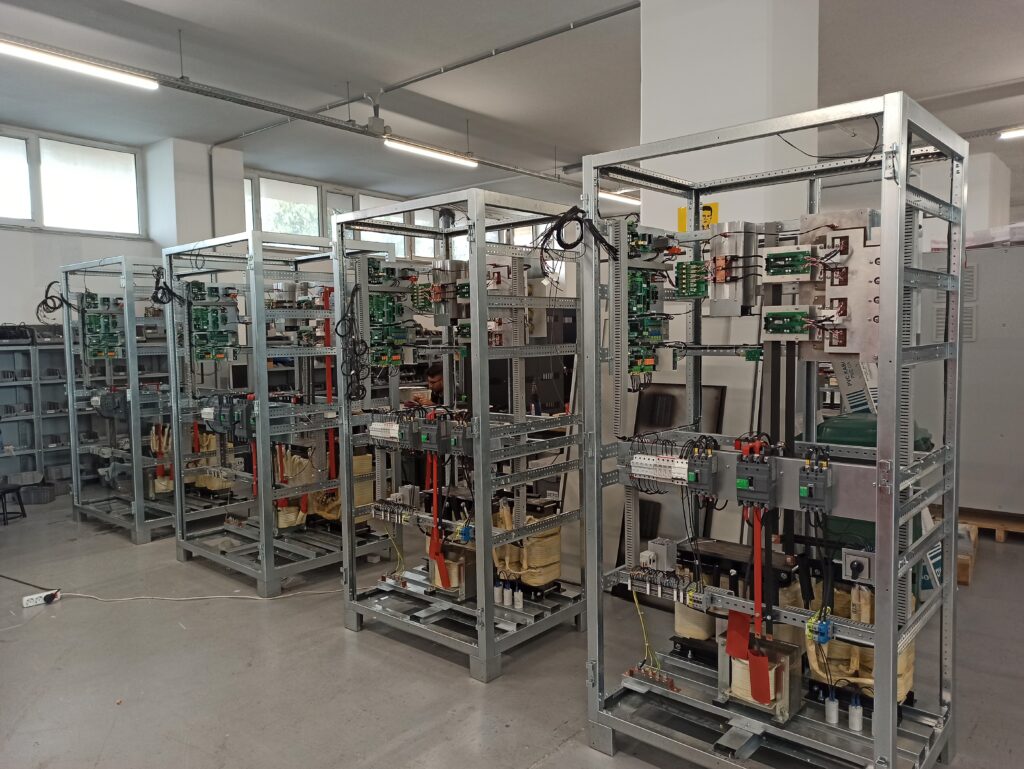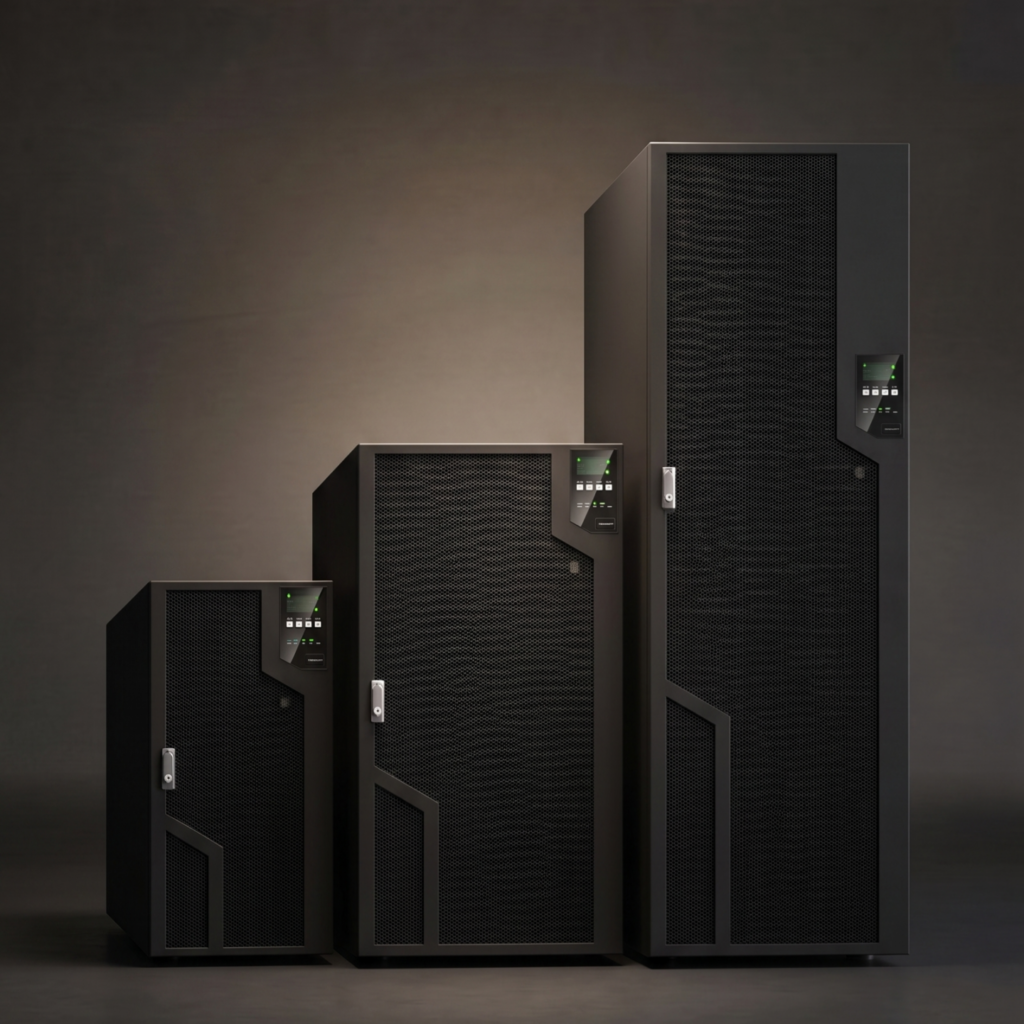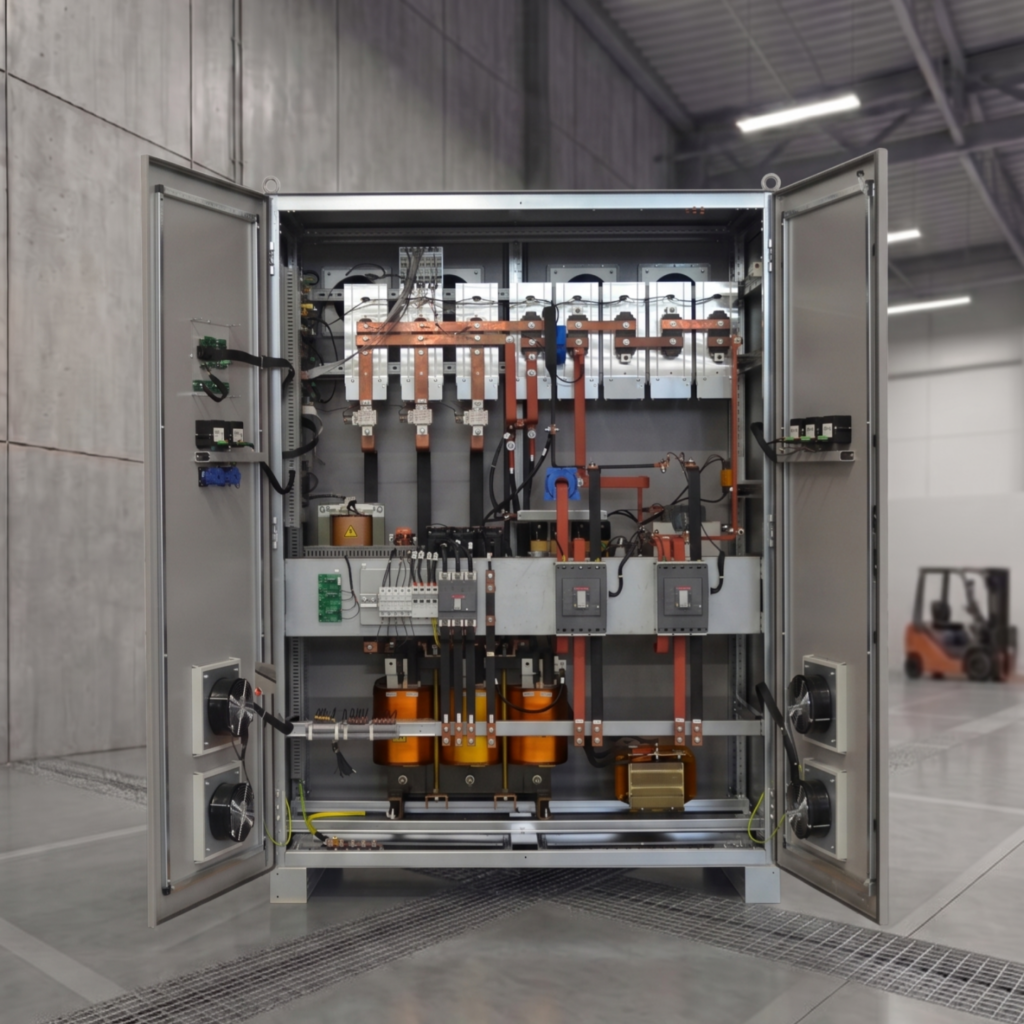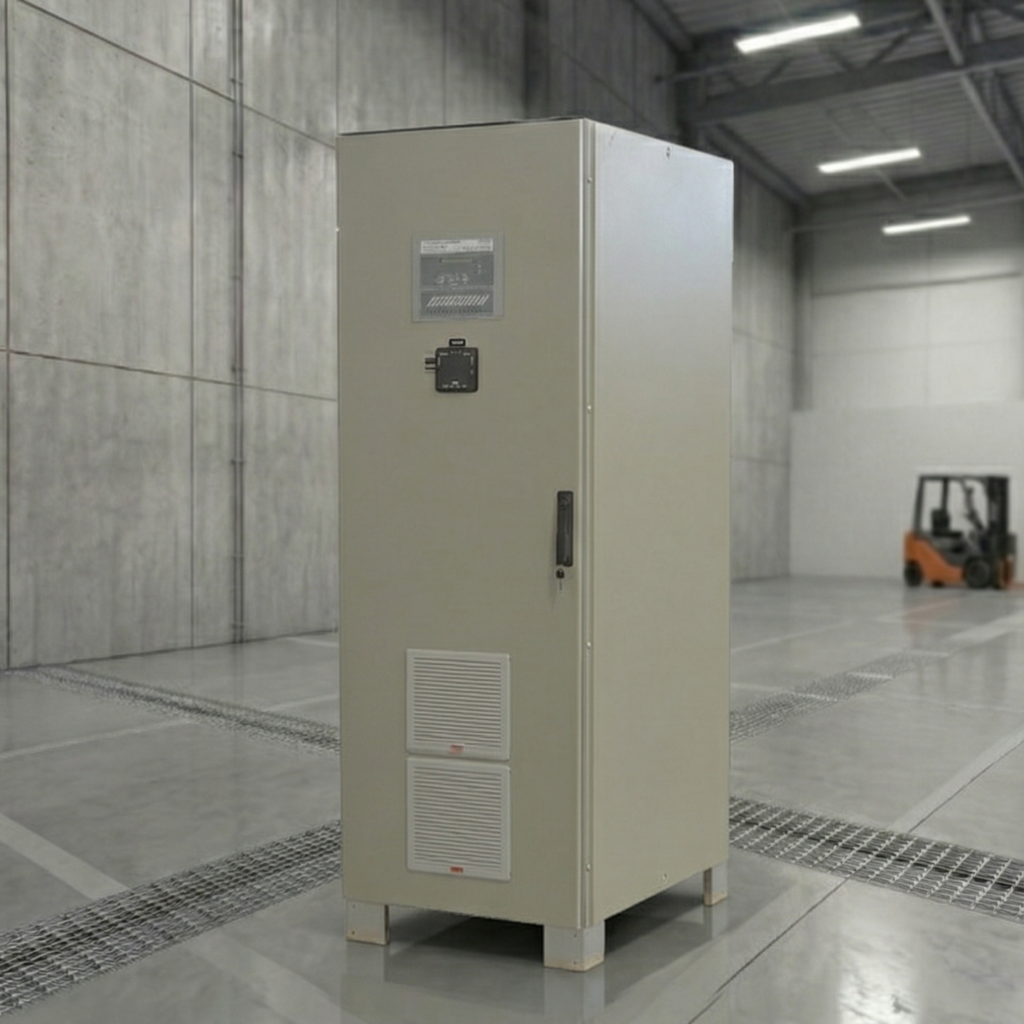

“Custom” is a word that survives contact with almost any marketing department. In power electronics it can mean anything from a genuinely bespoke design to a standard product with a different paint colour and an extra terminal block. The distinction is worth pinning down, because the projects where it matters are exactly the projects where […]
Frequency Converter Manufacturers: Why This Is Almost Never a Stock Item
Most industrial power equipment can be bought from a catalogue if the application is ordinary enough. Frequency converters are the exception. The reason is straightforward: a frequency converter exists because two electrical systems that were never meant to meet now have to, and the specifics of that mismatch are different every time. A 400 V […]
What Separates a Real Industrial Rectifier Manufacturer: Capability Is Proven at the Extremes
Any competent electronics company can build a 20 A rectifier. The population of companies that can build a 1200 A DC system, prove it at full load before shipment, and still be supporting it in twenty years is much smaller. That is the useful thing about rectifiers as a category: capability scales visibly. Current, thermal […]
Choosing an Industrial UPS Manufacturer: How to Tell a Builder from an Assembler
There are perhaps a few hundred companies worldwide describing themselves as industrial UPS manufacturers. A considerably smaller number actually design and build the equipment. The rest buy modules, populate a cabinet, add a logo and a warranty, and ship it. For an office building, that distinction barely matters. For a refinery, a substation, a metro […]
Industrial UPS vs Commercial UPS: The Engineering Differences That Decide Whether It Survives
Both products convert AC to DC, store energy in a battery, and convert back to AC. Both are sold as uninterruptible power supplies. Beyond that, they share very little — and the gap between them is where a substantial number of process plants have learned an expensive lesson. The problem is that the two look […]
STS vs ATS: Transfer Time, the ITIC Curve, and Which One Belongs Where
Two pieces of switchgear both promise the same thing: if source A fails, the load keeps running on source B. They cost an order of magnitude apart, and they are not substitutes for each other. Specifying the wrong one is one of the more common and more expensive mistakes in critical power design, because the […]
Running 60 Hz Equipment on a 50 Hz Supply: What Actually Fails, and How to Convert Properly
A plant buys a used packaging line from Texas. It arrives, the electricians look at the nameplate, and there it is: 460 V, 3-phase, 60 Hz. The local supply is 400 V, 50 Hz. Somebody suggests a step-up transformer and a trial run. Somebody else says the motors will just run a bit slower and […]
What is TN, TT and IT Systems
Insulation fails somewhere in the plant and a live conductor touches a metal enclosure. Everything that happens next, whether a breaker clears the fault in a fraction of a second, whether a residual current device sees anything at all, whether the enclosure sits at a dangerous voltage while production continues, is decided by a choice […]
Origin of Electric Frequencies
Look at the nameplate of any motor, transformer or power supply in your plant and you will find a number printed next to the voltage: 50 Hz, or 60 Hz, or occasionally 400 Hz. It looks like a specification handed down by physics. It is not. There is no natural law that makes fifty cycles […]
Industrial Energy Solutions: From Grid Connection to Energy Strategy
For most of industrial history, a factory’s relationship with energy was simple and passive: the grid delivered, the meter counted, the plant paid. That era is closing quickly. Energy prices swing with geopolitics, carbon accounting follows products across borders, customers audit their suppliers’ footprints, rooftops have become generation assets, ports demand shore power, and the […]
Critical Power Systems: Reliable UPS, Battery, and Backup Power Solutions
There is a category of electrical load whose defining property is that failure is not priced in money. The protection relay that must trip the moment a transformer faults. The tunnel ventilation controller during a fire. The operating theatre in minute forty of a procedure. The navigation bridge of a vessel in a shipping lane. […]
Industrial Power Supply Solutions: Designing Power as a System, Not a Shopping List
Every industrial facility eventually accumulates a power supply architecture. The question is whether anyone designed it. Walk through a typical plant that grew organically and you will find the archaeology: a UPS bought for the server room in one decade, a battery charger added with the substation in another, a voltage regulator installed after a […]
What is Three Phase Voltage Regulator?
Voltage problems rarely introduce themselves honestly. They arrive disguised as other people’s failures: motors that run hot for no reason, LED lighting replaced twice a year, drives that trip at the same hour every afternoon, welds that vary from shift to shift, a CNC machine that throws alarms whenever the compressor next door starts. Maintenance […]
Industrial Frequency Conversion: Connecting 50 Hz, 60 Hz and 400 Hz Systems Efficiently
The world never agreed on a single electrical frequency, and industry has been paying the bill ever since. Europe, most of Asia, and Africa settled on 50 Hz. The Americas and parts of Asia run 60 Hz. Aviation and much of the defense world standardised on 400 Hz. Ships carry whichever frequency their builders chose, […]
What is Industrial UPS?
There is a specific moment, familiar to anyone who has commissioned a factory, when somebody suggests protecting the process control system with the same kind of UPS that sits under a desk in the accounting department — just a bigger one. It sounds economical. It is how DCS servers end up rebooting during a voltage […]
What Are Industrial Rectifier Systems? Applications, Benefits & Types
Ask an operations manager to list the critical equipment in their facility and you will hear about turbines, compressors, servers, and switchgear. Almost nobody mentions the rectifier. Yet in a substation, a telecom exchange, an electrolysis line, or an offshore platform, the industrial rectifier is the machine that everything else quietly depends on. It charges […]
What is Industrial Inverter
Walk through the switchgear room of a modern facility and count the loads that would happily run on the raw grid alone. There are fewer than most people assume. Somewhere between the battery bank, the solar array, the shore connection, or the DC bus of a traction substation, a device has to take direct current […]
Industrial Transfer Switch: How ATS and STS Systems Keep Critical Loads Running
Ask anyone who runs a data hall, a pumping station, or a hospital basement what they fear most about the grid, and they rarely say “an outage.” Outages are expected. What they actually fear is the half second of confusion when one source drops and another has to take over. Get that handover wrong and […]
Custom Power Electronics Manufacturer: What to Look For Before You Commit
There is a moment in a lot of industrial projects where the standard catalogue runs out of answers. The voltage window is unusual, the ambient is brutal, the footprint is fixed, the load profile does not match anything a distributor stocks, or a certification body wants documentation that an anonymous gray-box supplier simply cannot produce. […]